Saturday, April 16, 2011

MOVIE REVIEW: Scream 4

I was only nine when the first Scream film came out in 1996. I'll never forget the first time I watched it. I rented it with my family and my dad had to leave during the movie to pick up my uncle. My mom, my brother and I were too scared to be left alone, so we piled in the car with him.

The first scene got under my skin, particularly when Casey says "I'm two seconds away from calling the police!" and Ghostface replies "They'll never make it in time." Which is a disturbing thought, especially since I lived in the middle of nowhere at the time.

After watching Scream, I became obsessed with it. In addition to watching it enough times to recite the dialogue, I did other obsessive things. At the time, my hair was very long and I got it cut into a bob, just like Drew Barrymore in the movie. I invented a game called "Scream" which I played with my friends and was basically just hide and seek except the seeker would "kill" you when found. And I had to go see Scream 3 in the theatre, which was a big deal for me because I rarely watched movies in the theatre as a child (I don't know where I was for Scream 2). I was only 12 at the time, so my best friend and I had to go with her grandpa and I felt like a baby, but I didn't care because I wanted see Scream 3 that badly.

So, 11 years after I sat in a theatre and watched Sidney Prescott try to get on with her life in the aftermath of the Woodsboro murders, I was psyched to do it all over again. And it was great to revisit Woodsboro and catch up with the characters. Sidney's just as tough as I remember, kicking ass against Ghostface, Dewey is just as dumb and Gale is just as bitchy and ruthless, doing whatever it takes to catch the killer.

Sidney (Neve Campbell) seems to have pieced her life back together and has written a self-help memoir, Out of the Darkness. She returns to Woodsboro for her book tour, on the anniversary of the murders. Meanwhile, Sidney's cousin, Jill (Emma Roberts), begins getting sinister prank calls. And then the murders begin. Sheriff Dewey (David Arquette) is on the case and his wife, Gale (Courtney Cox), is there to help.

While Scream 4 isn't as good as the first Scream film, it comes close and is definitely better than the other sequels. It has more gore than the previous movies - probably more than all of them combined. And more humour than the others, making me - and the rest of the audience - laugh out loud several times.

Scream 4 is more like a reboot than a sequel. Instead of focusing on Sidney, the storyline follows the new generation of teens, which are very similar to the original cast. There's Jill, the good girl (Sidney), Trevor, the creepy boyfriend (Billy), Kirby, Jill's hot best friend (Tatum) and Charlie, horror movie fanatic (Randy). This is probably the only aspect of the film that disappointed me. I was expecting the film to centre around Sidney, Dewey and Gale, and instead it's about a whole new set of characters. But the film is still entertaining and still includes Sid, Dewey and Gale, even if it doesn't revolve around them.

The film boasts an impressive cast, including appearances by Hayden Panettiere (Heroes), Rory Culkin (Signs), Erik Knudsen (Scott Pilgrim vs. the World), Adam Brody (The O.C.), Anthony Anderson (Urban Legends: Final Cut), Alison Brie (Community), Anna Paquin (True Blood), Kristin Bell (Veronica Mars), Shenae Grimes (90210), Lucy Hale (Pretty Little Liars), in addition to the actors I've already mentioned.

Scream 4 is a lot of fun and has everything you've come to expect from a film in the Scream franchise: a shocking opening sequence, creepy phone calls, a surprising ending and lots of self-referential horror humour. Definitely a must-see for Scream fans.

Rating: 4/5

Saturday, April 2, 2011

BOOK REVIEW: Dreadfully Ever After by Steve Hockensmith

When Fitzwilliam Darcy is bitten by a zombie - or a dreadful, as they're known as in the book - his wife, Elizabeth, fears that he will succumb to the strange plague. Fortunately, Darcy's aunt - and Elizabeth's nemesis - Lady Catherine de Bourgh knows of a cure. But there's a catch: it's made in small amounts for only "those of special interest to the Crown" and is located in a heavily guarded hospital. The only chance Elizabeth has to save her husband is to go to London and attempt to obtain it.

I haven't read Pride and Prejudice (or anything by Jane Austen), or the first two novels in this trilogy: Pride and Prejudice and Zombies or the prequel Dawn of the Dreadfuls. But you don't have to read any of these before Dreadfully Ever After to understand and enjoy it. I liked this novel so much that I'm sure I'll be reading the first two soon. Perhaps even Pride and Prejudice, but I don't think I'll find it nearly as entertaining without zombies.

The plot of Dreadfully Ever After has everything: action, romance, comedy, gore, duels, pranks, zombies, ninjas and more. There is rarely a dull moment. There's always a dreadful to slay, or a ninja to fight, or something comical happening...with the exception of a few chapters focusing on Mr. and Mrs. Darcy.

As I already shared, I haven't read Pride and Prejudice, so I'm not familiar with any of the characters. But in this novel, I found the main characters Fitzwilliam and Elizabeth Darcy to be pretty dull. Elizabeth didn't do anything but worry about Darcy, and Darcy only wondered why Elizabeth wasn't by his side. Luckily the other characters - especially Elizabeth's sisters Kitty and Mary - were funny and interesting.

Dreadfully Ever After is a fun read and I highly recommend it for zombie lovers. It is available now from Quirk Books, who have also published several other mash-up novels including Sense and Sensibility and Sea Monsters, Android Karenina and more.

Rating: 4/5

Friday, April 1, 2011

T-Shirt Bordello


I just got a package from the awesome website T-Shirt Bordello containing the items pictured above: an Amity Island t-shirt, an Amity Island keychain, a Zombie Care Bears t-shirt and Zombie Outbreak Barricade Tape. The t-shirts are 100% cotton, good quality (not too thin, soft to the touch) and I LOVE the designs.

They have tons of other cool t-shirts as well, and they're only $14.99 each! And if you buy 3, you get 1 FREE! Here are a few other designs I love:

A Nightmare on Sesame Street
Cthulhu Tequila
Camp Crystal Lake Counselor
Hello Zombie
And they sell more than just t-shirts. In addition to the aforementioned keychains and Zombie Outbreak Barricade Tape, they sell hats, mugs, glasses, ashtrays, wallets, a Zombie Survival Poster and Zombie Targets. Here are a few examples:

Bates Motel Mug
Winchester Tavern Glass
Overlook Hotel Ashtray
T-Shirt Bordello has a huge selection of t-shirts, and not just horror-related ones. Check out their website and see for yourself.

Thursday, March 17, 2011

Guest Post: The Secret of the WILD Zombies by Lincoln Crisler


Lincoln Crisler is the author of WILD, a zombie/western novella. This month he is doing a blog tour to promote WILD. Find out more about Lincoln on his website.

Melissa asked me to share some background on the zombies I created for my Weird Western novella, WILD, which made its paperback and digital format debut this month from Damnation Books. It's a fair question to ask; anyone who's read zombie books or watched zombie movies, even those produced in just the past few years, has seen, at a minimum, the following:

·      slow reanimated dead (Romero-style, baby!)
·      fast reanimated dead (Zombieland)
·      demon-possessed corpses (Brian Keene's The Rising)
·      infected living humans that act just like zombies (Joe McKinney's Dead World series)

All of these different sort of zombies (and I'm almost certainly forgetting a category or two) are good for something and serve a certain purpose; McKinney's infected living, for instance, raise a moral question that simply blasting the dead back to their graves just doesn't raise. Fast-moving dead are far more of a threat than slow-moving dead (though a creator does get bonus points for having a rationale behind rotting carcasses that are as spry as the living).

My zombies, however, are a little different from any of these. When my protagonists, a mysterious stranger; a sheriff's deputy; a dangerous outlaw and a former Army medic, meet the zombies, they're pretty much Romero-esque. They've crawled out of graves, they're rotten, et cetera. However, at the end of the book, someone living is slipped a mickey and turned into a mindless zombie. This might seem like a contradiction, but it's not. You won't find any of what I'm about to share in the pages of WILD, but this should shed a little light on the matter for those who like a look behind the scenes.

The drink my black magician dumps down the poor character's throat is a mixture of magic and pseudo-science, though it would all seem like magic to someone from the 1800s. Basically, from their perspective, the potion makes the person crazy and hungry for flesh and eventually kills him or her, with the magic still powering the now-decaying body. Where the pseudo-science comes in is from research indicating that damage to certain areas of the brain, like the amygdala, could cause a person to act much like a zombie. The drink does this damage. The magic is from ingredients in the drink that allow the magician to control the zombies, by commanding them to lay in graves until some meddling cowboys come calling, for instance, and in the animation of the corpse after death, which would have to be accomplished by magical means. Simple enough, right?

While I chose not to bog WILD down with the details, you can rest assured this potion and the zombies it spawns haven't had their last day in the spotlight. I have at least two more storylines in mind, and at least one of them is set in a time just a little more distant than Old West El Paso. Lets just say there isn't really all that much difference between zombies and mummies!

Sunday, March 13, 2011

SHORT STORY REVIEW: The Green Man by Lee Mather


The Green Man is Peter's mother's way of dealing with death. Prior to the death of someone close to her, he appears to comfort her. Just before Peter boards a flight, his mother calls to beg him not to get on the plane because she just saw The Green Man. Peter ignores her warning because he doesn't believe in him. But he should have listened because The Green Man is real.
 
There isn't much to the plot. The story is basically Peter describing the horrors of his flight and how it changed his faith. But it still manages to be exciting and even a bit gory.
 
The main character, Peter, is just an average guy and I really empathize with him and understand his skepticism about the existence of The Green Man. 

My one complaint is that the story is fairly predictable. About halfway through the story I knew how it was going to end. But that didn't make me enjoy the story any less. 
 
"The Green Man" is an interesting short story about faith and how a traumatic experience can change your life. It's available as an e-book from Damnation Books for $2.99.

Rating: 4/5

Tuesday, March 8, 2011

BOOK REVIEW: Shades of Green by Ian Woodhead

One day Holburn is the average small English town, and the next it is transformed into a Hell with killer plants, monstrous spiders, demons and other horrors. Survivors Damian, his girlfriend, Jen, his brother, Alan, Jen's uncle, Pete, his friend, Dave, an old man, Arthur, and a hobo, Ernest, struggle to escape the town and attempt to figure out what is happening.

Shades of Green has an interesting, but convoluted, concept. At the beginning, the reader is placed in the middle of the action and it takes awhile to get into the book because you have no idea what is going on. There are also several dream sequences which make you question whether what you're reading is real, or just another dream. I was unsure of what was happening throughout the book and I still don't fully understand because the resolution was confusing as well.

The typos don't help to understand the plot either. The book is full of major errors, which change the meaning of sentences. I had to re-read some sentences several times and guess at what word Woodhead actually meant to use. For example, in the first chapter the names of the two brothers are reversed. Damian is described as the older brother who has a fear of germs and Alan is the younger brother who is dating Jennifer. Then in Chapter 2, they are the opposite. It was incredibly confusing and I didn't know which was the mistake.

The characters aren't developed well and are basically just names on a page. I constantly confused Arthur, Dave and Pete because they were all referred to as "old men" and didn't have many other discerning qualities.

But Woodhead writes great descriptions of the disturbing scenery in Holburn, making it easy to picture the ruined town and also creates some very gruesome images.

Shades of Green would be a decent novel if it was edited better. If you don't mind typos, you can buy it for only 99 cents on Amazon. But I would recommend skipping this one.

Rating: 2/5

Thursday, March 3, 2011

2010 Bram Stoker Award Nominees


The 2010 Bram Stoker Award nominees have been announced. They will be presented at Stoker Weekend, which is from June 16-19 in Long Island, New York. Congratulations to all the nominees! Here's the list:

Superior Achievement in a Novel

Horns by Joe Hill (William Morrow)
Rot and Ruin by Jonathan Maberry (Simon & Schuster)
Dead Love by Linda Watanabe McFerrin (Stone Bridge Press)
Apocalypse of the Dead by Joe McKinney (Pinnacle)
Dweller by Jeff Strand (Leisure/Dark Regions Press)
A Dark Matter by Peter Straub (DoubleDay)

Superior Achievement in a First Novel

Black and Orange by Benjamin Kane Ethridge (Bad Moon Books)
A Book of Tongues by Gemma Files (Chizine Publications)
The Castle of Los Angeles by Lisa Morton (Gray Friar Press)
Spellbent by Lucy Snyder (Del Rey)

Superior Achievement in Long Fiction

The Painted Darkness by Brian James Freeman (Cemetery Dance)
Dissolution by Lisa Mannetti (Deathwatch)
Monsters Among Us by Kirstyn McDermott (Macabre: A Journey through Australia’s Darkest Fears)
The Samhanach by Lisa Morton (Bad Moon Books)
Invisible Fences by Norman Prentiss (Cemetery Dance)

Superior Achievement in Short Fiction

Return to Mariabronn by Gary Braunbeck (Haunted Legends)
The Folding Man by Joe R. Lansdale (Haunted Legends)
1925: A Fall River Halloween by Lisa Mannetti (Shroud Magazine #10)
In the Middle of Poplar Street by Nate Southard (Dead Set: A Zombie Anthology)
Final Draft by Mark W. Worthen (Horror Library IV)

Superior Achievement in an Anthology

Dark Faith edited by Maurice Broaddus and Jerry Gordon (Apex Publications)
Horror Library IV edited by R.J. Cavender and, Boyd E. Harris (Cutting Block Press)
Macabre: A Journey Through Australia’s Darkest Fears edited by Angela Challis and Marty Young (Brimstone Press)
Haunted Legends edited by Ellen Datlow and Nick Mamatas (Tor)
The New Dead edited by Christopher Golden (St. Martin's Griffin)

Superior Achievement in a Collection

Occultation by Laird Barron (Night Shade Books)
Blood and Gristle by Michael Louis Calvillo (Bad Moon Books)
Full Dark, No Stars by Stephen King (Simon and Schuster)
The Ones That Got Away by Stephen Graham Jones (Prime Books)
A Host of Shadows by Harry Shannon (Dark Regions Press)

Superior Achievement in Nonfiction

To Each Their Darkness by Gary A. Braunbeck (Apex Publications)
The Conspiracy Against the Human Race by Thomas Ligotti (Hippocampus Press)
Wanted Undead or Alive by Jonathan Maberry and Janice Gable Bashman (Citadel)
Listen to the Echoes: The Ray Bradbury Interviews by Sam Weller (Melville House Publications)

Superior Achievement in a Poetry Collection

Dark Matters by Bruce Boston (Bad Moon Books)
Wild Hunt of the Stars by Ann K. Schwader (Sam's Dot)
Diary of a Gentleman Diabolist by Robin Spriggs (Anomalous Books)
Vicious Romantic by Wrath James White (Bandersnatch Books)

Wednesday, March 2, 2011

Monday, February 28, 2011

Interview with Kathryn Ptacek

Kathryn Ptacek is the author of many novels in several different genres including horror, historical fiction, historical romance, fantasy and suspense. Her horror novels include Shadoweyes, Blood Autumn, Kachina, In Silence Sealed and Ghost Dance. She edited the anthologies Women of Darkness, Women of Darkness II and Women of the West. She is also the editor of a market newsletter, The Gila Queen's Guide to Markets. You can find out more about Kathryn at her website.

What drew you to the horror genre?

I guess I’ve always been drawn to dark things.  If goth had been around when I was a teen, I’m sure I would have been one.  I read Dracula when I was 14, and I think I was pretty much hooked from then on.  Everything I wrote as a teen had a dark aspect to it, and even when I first started writing historical romances, my agent remarked that a current of darkness ran through them.  So I guess it was a natural progression to horror.

What scares you?

I find personal things scary--loss of a loved one, a horrible illness in the family ... that kind of grim reality-based stuff.  I’ve faced all that, and I guess I survived somewhat intact, and I don’t know that much scares me after that.  I do get creeped out occasionally with supernatural things, but it’s usually ghost-type material.  I like to read about werewolves and vampires (not so much since they’re everywhere in the genre now) and unusual critters/monsters.  As for zombies ... I’m not a fan, although there are a couple of zombie movies I like.  I enjoy psychological horror/thrillers, but not the torture stuff.  Thanks, but no thanks.

Why do you think there are fewer women writing horror than men?

I don’t know.  Maybe there’s a perception that horror is for guys, romance for women ... and yet I’ve known men who write romance.  I think there are lots of women writing horror, but I just don’t think there are as many “big” name women horror writers.  Again, with the perception thing--I know that women are often thought to write “soft” horror, and that’s not at all true.  Good horror is just that, no matter the gender of the writer.

You were the editor of Women of Darkness and Women of Darkness II, horror anthologies comprised of stories by women writers. How did they come about?
  
Back in the ‘80s I was reading a lot of anthologies, and one day I realized that few of these books had many women contributors.  And then because I get a little obsessive about things now and then, I started looking through dozens of anthologies and counting the women writers ... Most books had one or two women contributors; that was it.  The exception was the Shadows series, edited by Charles L. Grant.  Yet I knew there were lots of women horror writers out there, but for whatever reason their stuff just wasn’t showing up in books.  So I decided to do something about it, which is why I came up with the Women of Darkness anthologies.  By the way, I was accused by some folks as being sexist.  That really irked the heck out of me, I have to say--especially when I pointed out that these same people weren’t saying the same thing about the all-male anthologies.  All I wanted to do with those two books was feature the women I knew who were “out there” waiting to be read.

It’s never been about quotas.  I don’t think you have to have a certain number of men or women in a book; it would just be nice to see more of a mix.

And I would love to edit a third Women of Darkness volume ... Stay tuned!

Who are some women horror authors that you admire?

Heh ... I don’t want to step on any toes here, so I’m going to say that I enjoy a number of stories and novels by horror women, past and present.  How’s that for waffling?  Heh.

What is your advice to aspiring women horror writers?

Write, write, write.  And keep sending your stories and novels out.  And don’t get upset when your work is bounced; send it back out the next day; don’t let it sit around any longer than 24 hours.  I was reading some posts on a list one day, and a woman had her novel rejected, and she was practically taking to her bed--she was that despondent.  I don’t recall if she was sobbing, but it was close to that.  Really, you have to be tougher than that.  If each rejection hits you so hard you go into such a tailspin that you can’t function for days, then you’ll be an emotional puddle before long and won’t get much done.  You have to have a thick skin in the writing business.  This doesn’t mean you don’t have to like rejections, of course--no one does--but you have to realize, too, that everyone gets rejected.  You just can’t let that stop you ... or even slow you down.

What are your favourite horror novels?

Hmmm ... where to start.  I’m partial to mine ... of course!  And I loved the Oxrun Station novels that Charlie wrote.  Well, this list could get quite lengthy, I think.  Stoker’s Dracula will always have a special spot for me.

What is your favourite novel you’ve written and your favourite character you’ve created? Why?

My favorite novel is In Silence Sealed ... which is the TRUE story of what happened to Byron, Keats, and Shelley.  I just really enjoyed doing that book ... bringing all the stories of those three young but doomed poets--plus Mary Shelley--together ...

My favorite character is Chato from Shadoweyes. He’s an Apache in modern-day New Mexico; I’d like to use him in some mysteries.

In addition to horror, you’ve also written historical fiction, romance, suspense and fantasy. How did you end up writing in so many different genres? Do you have a favourite genre?

I enjoy reading many different genres, so it was only natural that I write in several, as well.  I do believe it’s not good to write just one kind of thing ... if there’s a down-turn in that genre, then you’re stuck.  But if you can write many different ways, then you have numerous options open to you.  I also encourage fiction writers to try their hand at nonfiction or poetry.  My favorite genre is pretty much historical anything.  I just really enjoy it ... I have a lot of history in all my books, and someday I’d like to write a straight historical novel.

You are the editor and publisher of the market newsletter, The Gila Queen’s Guide to Markets. When and how did you start it? Do you have any advice on getting published?

I started the newsletter back in late ‘88.  I had just had an operation, and I was looking for something fun to do ... I was between book projects.  For a while I’d been sending market news to friends in letters, and I kept joking that I ought to start a newsletter with all these bits of info I was collecting.  So then I got to thinking that maybe that wasn’t a bad idea.  The newsletter started out as a page or two, then kept getting larger and larger and more elaborate until finally I had a lengthy newsletter (never less than 20 pages and often more than 30) coming out on a monthly basis.  This was back in its print days.  I did that for many years, and it involved a lot of hard work, but I really enjoyed it.  Then eventually I changed the newsletter to an E-mail format; it now comes out six times a year.
        
I’ve read a lot of guidelines from publishers over the years, and the one thing that almost all magazine editors say is:  Read several issues so you know what we’re all about.  I think that’s the best thing a new writer can do ... read those back issues!  Do you homework!  Be prepared!  On the other hand, don’t be afraid to send something “out there” now and then ... you just never know.  A fiction writer can do this more easily than a nonfiction one; magazine editors look for something particular in the articles they buy, so do adhere to their guidelines.

Do you own an e-reader? How do you think e-readers are changing the publishing industry? Do you plan on making your older novels available as e-books?

Currently, I don’t have an e-reader, but I will probably get one fairly soon.  I had been resisting for a while, because I don’t much care for reading things on a screen--I spend so much time in front of the computer, so I do want to get away from that. But e-books are the way of the future--or one way--so it’s good to know about them.  Plus one of my novels, In Silence Sealed, will be published as an e-book, and that’s made me a whole lot more excited about e-readers and e-books.  Heh.

I think that print books are here to stay, but I think they will be sharing mental shelf space, as it were, with e-books.  Everyone I know who has an e-reader says they’re not giving up their print editions, and they buy both.

I do hope to make my backlist available in the e-book format ... and in print again as well.  I don’t think any writer can ignore e-publishing; it’s here to stay, and we might as well find a way to make money from it!

What do you hope readers get out of your work?

I hope readers will be entertained.  And maybe if they learn a thing or two that would be good as well.

What are you currently working on?

A friend wants to collaborate with me on a novel, and that will be interesting.  I’ve co-written some short stories years ago, but never written anything that long with another person.  Also, I have some other items that have been floating around for a while; maybe it’s time to tether them and see what I could make of them.

Sunday, February 27, 2011

Interview with Allyson Bird

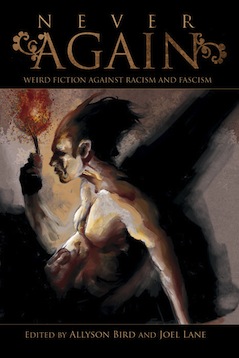
Allyson Bird is the author of two collections: Bull Running for Girls and Wine and Rank Poison. She has co-edited with Joel Lane the anthology, Never Again. Her debut novel, Isis Unbound, is due out in the summer from Dark Regions Press. She won The British Fantasy Society award for best collection, for Bull Running for Girls, in 2009. You can find out more about Allyson Bird on her website.


What drew you to the horror genre?

It started in childhood. I lived at the entrance to a dark wood and during the day I would run out of the house and down the wide path into it. I could be totally alone to think about stories. At night from my bedroom window, the entrance looked like an enormous abyss, and I imagined that anything could dwell there. I had quite a lot of freedom from the age of ten and would wander through the wood to the village graveyard and sit amongst the graves reading the names and dates. One headstone was for a family who had died of the plague in the sixteen hundreds. I liked ghost stories and anything to do with witches, goblins and monsters. I read anything I could get my hands on, including Marvel Comics.  DC Comic Wonder Woman was a favourite. My father was a fan of American pulps, so I read Edgar Rice Burroughs, and detective stories. I read horror stories to have my emotions heightened, in other words I wanted to be afraid, and feel the excitement from that.  

As an adult I can't think of a better genre than horror to convey emotion and I've used it to explore the horror which is actually in the world around us as well as the strange and weird. Everything from misogyny, to genocide, to personal loss, and fear of the unknown. 

What scares you?

The thought of losing my mind one day. When my sister was very ill she said she saw demons and the thought of that is horrible. Doesn't matter if they aren't there...if you believe they are, they are. The thought that the supernatural could exist is a frightening prospect, too. Something that happened a long time ago terrified me. I either had a breakdown, or was drugged, or the supernatural really does exist. I wrote about what happened to me in "Shadow Upon Shadow," in Bull Running for Girls. I'm damn well sure the circumstances that led up to it won't happen again...well, I hope not. The problem is if you really believe that something strange is going on you can create your own reality, and that way leads to madness.

Also the horror and suffering we see around the world each day. The thought that there is a country not far away where people stone women and men for adultery. Shocking. The thought, that on the orders of some despot, or other, people can 'disappear.' That sex slavery exists and that witch hunting still happens in Africa.

Why do you think there are fewer women writing horror than men?

Men will write to a publisher/editor and ask to be included in an anthology...women seem to hold back a little. They don't seem as confident as men in the genre. Nancy Kilpatrick goes into it in great detail in her interview on this site. It wasn't such a long time ago that it was a common belief that women couldn't or shouldn't achieve in the areas men had traditionally dominated, including writing, especially horror, even though Mary Shelley wrote one of the most memorable horror stories of all time.

Who are some women horror authors that you admire?

Lisa Tuttle is outstanding. I'll forget someone if I mention others.

What is your advice to aspiring women horror writers?

Never give up. Push yourself forward and if that means self-promotion just get on with it. Publishers expect you to now, anyway. The small press have no budget for advertising so it really is up to the author to tell people their news about their books where ever they can. Women have been practically invisible to some people for long enough. We have spent years in the background and have been forgotten by history, in science and in the arts. Don't let it happen to you.

What are your favourite horror novels?

Horror...for me, can be within the strange, the weird, the fantastic, and the cruelty and terror in every day life so I'll not mention any particular novel. I'd like to mention my two favourite strange/weird collections. The Wine Dark Sea by Robert Aickman and Nest of Nightmares by Lisa Tuttle. Both writers have been a great influence on me.

Who are your favourite authors? Who influenced you the most?
  
Mikhail Bulgakov, Angela Carter, Sylvia Plath, Robert Aickman, Lisa Tuttle, Peter Hoeg, Ramsey Campbell, Ray Bradbury, and Shakespeare. Of all I think Angela Carter has influenced me the most. And I've always appreciated poetry, especially William Blake, Swinburne, Keats and Yeats.

You’ve written several short stories. Do you have a favourite? Why?

Two of my favourites are companion stories. The Black Swan of Odessa, is a homage to Mikhail Bulgakov and will appear in an anthology dedicated to him, this year. It is, on one level, about the actual chair in a play by Ilf and Petrov, Russian writers in the 1920's, and the second story, The Twelfth Chair, is set in modern day, in the same place in Odessa, and is connected to the first. One theme in the first is greed and the dominant theme in the second story is abuse of women.

Your first novel, Isis Unbound, is coming out soon. Can you tell us about it?

Inspired by Mary Shelley, Percy Bysshe Shelley's, Prometheus Unbound, and Rider Haggard/R.E.Howard to some extent, Isis Unbound is set in 1890's Manceastre, Britanniae, ruled by a new governor general, Clovis Domitius Corbulo. He is related to Cleopatra LV descendant of Anthony and Cleopatra who won the battle of Actium two thousand years ago. Only a god can kill a god. Nepythys has killed her sister, Isis, and therefore the dead cannot pass over to the underworld. Ella, eighteen and Loli - age ten, are the daughters of Ptolemy Child. The sons and daughters of embalmers are expected to begin instruction in the embalming process at an unusually young age. Against this background we follow the girls on their adventure in Manceastre and Alexandria to discover the greatest mystery of all - involving Isis herself. An Isis who will stop at nothing to ensure her own survival…  

You were a co-editor for the anthology, Never Again, which features stories against fascism and racism. Can you tell us about it?

Joel Lane asked me to co-edit the anthology with him and we are happy with the depth and scope of the work sent to us. There were a few reprints we went after...actually Joe Lansdale gave us the choice of three and we chose The Night They Missed the Horror Show instead of the longer Mad Dog Summer. I definately wanted Rob Shearman's, Hitler's Dog, and Stephen Volk's After the Ape in there, too. We had twenty three stories in all. We very much knew we were preaching to the converted in that those who would buy already had strong feelings about injustice, intolerance and persecution. The authors asked to contribute felt that they wanted to nail their colours to the mast. Some quite amazing stories have been written. I'm delighted to say that Amnesty International have agreed to stock the book, also.

Do you own an e-reader?

I don't own an e-reader. At the moment I prefer the feel of an actual book but will consider it in a year or two.

What do you hope readers get out of your work?

Enjoyment. Transportation away from every day life for a time. Empathy.

What are you currently working on?

I'm working on a few short stories for anthologies and about to collaborate on a book with the artist, Dani Serra.